
Table of content:
- What an Automated Funnel Actually Looks Like
- Stage 1: Attraction (Top of Funnel)
- Stage 2: Lead Capture
- Stage 3: Automated Nurture Sequence
- Stage 4: Conversion
- Building Multiple Funnels for Different Audience Segments
- Retargeting as a Funnel Extension
- Webinars and Video as High-Converting Funnel Stages
- Funnel Analytics: What to Track Beyond Conversion Rate
- Legal and Compliance Considerations for Automated Funnels
- Funnel Maintenance: What Breaks Over Time
- A Sample Funnel Structure From Start to Finish
- Pricing Strategy Within a Funnel
- Tools That Power Automated Funnels
- Segmenting Leads for Better Conversion
- Testing and Optimizing the Funnel
- Combining Funnels with Other Passive Income Streams
- Common Mistakes in Funnel Building
- Related Guides
- FAQ
- Action Plan
A sales funnel that requires manual follow-up for every lead isn’t passive, it’s a job with extra steps. An automated funnel removes the founder from the day-to-day sales process entirely, using email sequences, landing pages, and triggered actions to move a stranger from first contact to paying customer without anyone manually intervening.
What an Automated Funnel Actually Looks Like
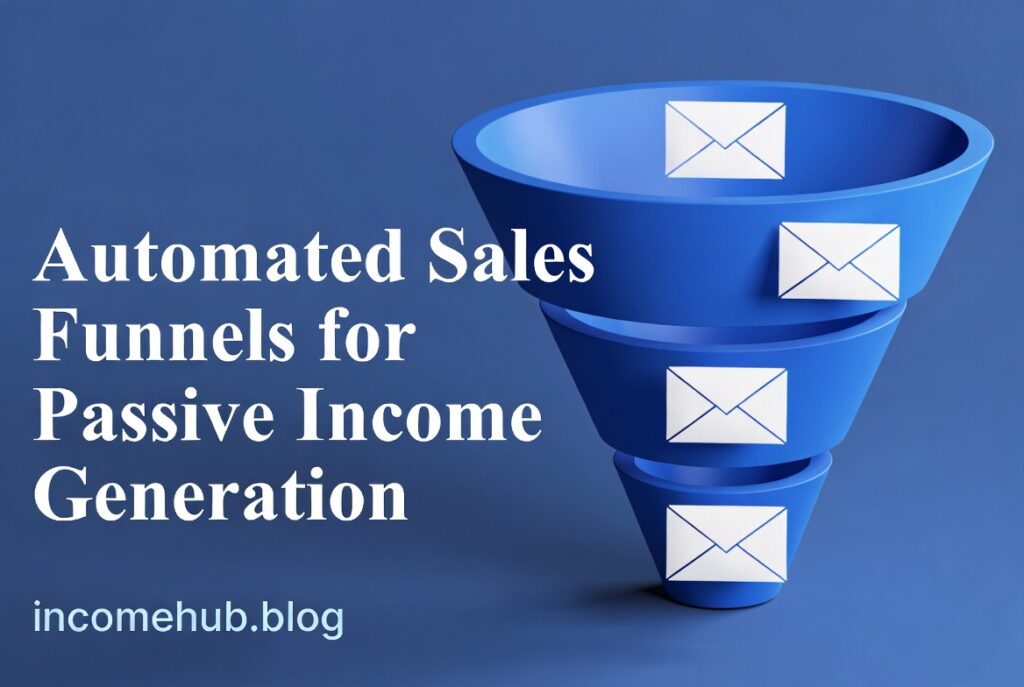
A typical automated funnel has four stages: attracting visitors, capturing leads, nurturing those leads through automated content, and converting them into customers, all without manual outreach at any stage. Each stage is built once and then runs continuously in the background, processing new leads exactly the same way regardless of volume.
Stage 1: Attraction (Top of Funnel)
Traffic enters the funnel through search engine content, social media, paid ads, or referrals. For a passive income focus, organic channels like SEO-optimized content tend to compound over time, continuing to attract new visitors long after publication without ongoing ad spend.
Stage 2: Lead Capture
A landing page offering something valuable, a free guide, checklist, or tool, in exchange for an email address converts anonymous traffic into a contactable lead. The offer needs to solve a specific, narrow problem; vague lead magnets convert poorly compared to ones promising a clear, immediate outcome.
Stage 3: Automated Nurture Sequence
Once captured, leads enter an email sequence that builds trust and demonstrates value before any sales pitch appears. A well-structured sequence typically delivers value first across several emails, addresses common objections, and only then introduces the paid offer, all triggered automatically based on when the lead joined rather than requiring manual sends.
Stage 4: Conversion
The final stage presents the offer clearly, with urgency or scarcity elements where genuinely applicable, and a frictionless checkout process. Cart abandonment sequences, automatically triggered when a lead starts but doesn’t complete checkout, recover a meaningful percentage of otherwise lost sales without any manual follow-up.
Building Multiple Funnels for Different Audience Segments
A single generic funnel rarely converts equally well across a diverse audience. Beginners and advanced users, for example, respond to different messaging and value propositions. Building separate funnel variants tailored to distinct audience segments, while sharing underlying infrastructure where possible, significantly improves overall conversion rates compared to forcing every visitor through an identical generic sequence.
Retargeting as a Funnel Extension
Visitors who engage with top-of-funnel content but never convert represent a substantial recoverable opportunity. Retargeting, showing targeted ads to people who previously visited your site or engaged with your content, extends the funnel beyond the initial visit, often converting visitors who needed additional exposure before making a purchase decision. This works particularly well combined with the email nurture sequence, reinforcing the same message across multiple channels simultaneously.
Webinars and Video as High-Converting Funnel Stages
Live or automated webinars combine education and sales into a single high-engagement format that consistently outperforms text-based sales pages for higher-priced offers. An evergreen, pre-recorded webinar that runs automatically on a schedule preserves the passive nature of the funnel while capturing the engagement benefits that live presentations typically generate, making it a particularly effective addition for funnels promoting courses or higher-ticket digital products.
Funnel Analytics: What to Track Beyond Conversion Rate
Conversion rate alone doesn’t reveal where a funnel is actually losing the most value. Tracking time-to-conversion (how long leads take to become customers), average order value, and customer lifetime value from each funnel segment reveals which traffic sources and lead magnets attract the most valuable long-term customers, not just the highest immediate conversion rate. A funnel optimized purely for conversion rate without this broader context can inadvertently prioritize low-value customers over fewer, more valuable ones.
Legal and Compliance Considerations for Automated Funnels
Automated email sequences are subject to anti-spam regulations in most jurisdictions, requiring clear unsubscribe options, accurate sender information, and consent-based list building. Beyond legal compliance, respecting these boundaries protects long-term deliverability, since email providers penalize senders with high spam complaint rates by routing future emails to spam folders regardless of content quality.
Funnel Maintenance: What Breaks Over Time
Automated funnels aren’t immune to decay even without anyone touching them. Landing page software updates, broken integrations between tools, expired payment processor connections, or simply audience fatigue with a once-effective lead magnet can quietly degrade conversion rates over months without triggering any obvious alert. A quarterly end-to-end test, walking through the entire funnel as a new visitor would, catches these silent failures before they meaningfully impact revenue.
A Sample Funnel Structure From Start to Finish
A concrete example clarifies how the pieces connect. A visitor arrives via a search-optimized blog post about a common problem in the niche. An embedded call-to-action offers a free checklist solving a narrower version of that problem, in exchange for an email address. Upon signup, an automated sequence of six emails over two weeks shares related tips, addresses common objections, and shares a brief case study, before the sixth email introduces a paid product or service as the natural next step. Visitors who click but don’t purchase enter a three-email reminder sequence over the following week, often including a frequently asked question or a limited-time incentive. This entire structure, once built, processes every new visitor identically without requiring any manual intervention, while still feeling personally relevant because the content was designed around the specific problem that brought the visitor in originally.
Pricing Strategy Within a Funnel
A single-offer funnel captures one transaction per converting customer. A funnel structured with a low-cost initial offer (a “tripwire” priced low enough to remove purchase hesitation) followed by a higher-priced core offer captures more total revenue per customer by first establishing a purchase relationship, however small, before presenting the larger offer. This staged pricing approach generally outperforms a single high-price offer presented immediately to cold traffic, since the initial small purchase meaningfully increases trust and conversion likelihood for the subsequent, larger offer.
Tools That Power Automated Funnels
Email marketing platforms with automation capabilities handle the entire nurture sequence based on triggers like signup date, link clicks, or purchase behavior. Landing page builders create the capture and sales pages without requiring custom development. Payment processors handle checkout and can trigger fulfillment automatically, whether that’s delivering a digital product instantly or notifying a team for physical fulfillment.
Segmenting Leads for Better Conversion
Not every lead is at the same stage of readiness. Behavioral segmentation, separating leads based on which content they’ve engaged with or which links they’ve clicked, allows the automated sequence to send more relevant follow-up content, significantly improving conversion rates compared to a single generic sequence sent to everyone.
Testing and Optimizing the Funnel
A funnel built once and never reviewed slowly loses effectiveness as audience behavior and platform algorithms change. Track conversion rates at each stage, landing page visit to lead, lead to email open, email click to purchase, to identify exactly where the funnel is losing potential customers, then test changes to that specific stage rather than overhauling the entire system at once.
Combining Funnels with Other Passive Income Streams
Automated funnels work particularly well alongside digital products, online courses, and affiliate marketing, since the entire customer journey from discovery to purchase can run without manual involvement once built. The same funnel structure can promote multiple offers over time by simply updating the conversion stage while leaving the attraction and nurture stages intact.
Common Mistakes in Funnel Building
Skipping the value-first nurture sequence and pitching immediately drives away leads who haven’t yet built trust. Overcomplicating the funnel with too many steps before the first purchase opportunity increases drop-off at each additional stage. Neglecting mobile optimization on landing pages, where a significant share of funnel traffic now originates, quietly costs conversions that are never tracked back to the real cause.
Related Guides
This pairs naturally with building a profitable niche website to drive top-of-funnel traffic and subscription business models as a funnel’s end conversion goal. See more in our Passive Income category.
FAQ
How long does it take to build a working automated funnel?
A basic funnel can be built in a few weeks, though optimizing it for strong conversion rates typically takes several months of testing and refinement.
Do I need paid traffic for a funnel to work?
No, funnels can run entirely on organic traffic from SEO content or social media, though paid traffic can accelerate volume once the funnel’s conversion rates are proven.
How many emails should a nurture sequence include?
Most effective sequences range from five to ten emails delivered over one to three weeks, though the right number depends on the price point and complexity of the offer.
Is a sales funnel truly passive once built?
The day-to-day operation requires minimal intervention, but periodic review and optimization remain necessary to maintain conversion rates as audience behavior shifts over time.
Can a single funnel promote multiple different products?
Yes, though it’s generally more effective to keep the initial nurture sequence focused on one primary offer, introducing complementary products afterward through a separate sequence once trust with that specific offer has been established.
What’s a realistic conversion rate to expect from an automated funnel?
Conversion rates vary enormously by industry, price point, and traffic quality, but even a modest one to three percent conversion rate from cold traffic to paying customer can be highly profitable at sufficient traffic volume.
Action Plan
- Define a single, narrow lead magnet that solves one specific problem.
- Build a landing page focused entirely on capturing email addresses.
- Write a five-to-ten email nurture sequence that delivers value before pitching.
- Set up automated triggers based on signup date and engagement behavior.
- Review conversion rates monthly and test one funnel stage at a time.